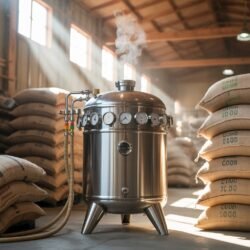
Imagine tasting a coffee that bursts with mango, red wine, and cacao nibs—flavors so vivid they seem almost engineered. That vivid cup is often the result of anaerobic coffee processing, a post-harvest technique that borrows from winemaking to create an oxygen-free fermentation chamber. Instead of letting coffee cherries ferment in open-air tanks or patios, producers seal them (either whole or after pulping) inside stainless-steel tanks, plastic barrels, or even GrainPro bags. A one-way valve or a shot of CO₂ drives out oxygen, and the cherries stew in their own juices, surrounded only by the carbon dioxide they naturally exhale.
Depriving microbes of oxygen changes the entire biochemical dance. Yeast and bacteria that thrive in low-oxygen conditions produce more lactic acid and esters, yielding cup profiles reminiscent of tropical fruit punch, rum-soaked raisins, or a silky red-wine reduction. Because the tank is sealed, growers can track temperature, pH, and time like a laboratory experiment, tweaking each variable to replicate—or reinvent—the flavor of a given lot. Fermentation usually lasts 48–72 hours, but some daredevils push it longer, chasing even more dramatic notes.
There are two main routes through the anaerobic maze. In anaerobic natural processing, the whole cherry is sealed and later dried with its fruit intact, leading to heavy body and explosive berry sweetness. Anaerobic honey or washed lots start the same way, but after the sealed fermentation the skin and pulp are removed—leaving sticky mucilage for honey-style drying or washing it off entirely—resulting in a cleaner cup that still carries the hallmark winey acidity. Both styles require meticulous monitoring; a single misjudged variable can swing the batch from “fruit bomb” to “funky disaster,” and the extra tanks, gauges, and labor don’t come cheap.
Pioneered in specialty hubs like Colombia and made famous by 2015 World Barista Champion Sasa Sestic, anaerobic coffees are still the new kids on the processing block. Roasters and baristas prize them for their storytelling potential—one sip can transport drinkers from a volcanic slope in Huila to a Napa Valley cellar—while producers view them as a ticket to higher premiums and market differentiation. As more farms invest in sealed tanks and data loggers, the line between coffee and craft beverage continues to blur, promising ever more audacious flavor adventures in your morning mug.